

- 全国咨询热线 18550048524

- 企业邮箱 ming_qiann@163.com
The global composites industry has recently experienced a new wave of growth, with numerous companies achieving breakthroughs in technology research and development, capacity expansion, and market applications. In Europe, a leading materials manufacturer announced a €2 billion investment in a global carbon fiber production facility, expected to increase Europe's total carbon fiber production capacity by 50% upon commissioning in 2025. The project utilizes a green production process that reduces carbon emissions by 60% compared to traditional methods and is primarily targeted at the aerospace and new energy vehicle sectors.
The Asian market is also active. A multinational materials group has successfully developed a globally recyclable thermoset composite material. Through innovative chemical depolymerization technology, the resin matrix is fully recycled, retaining over 95% of the material's properties. This technology has been granted an international patent and is scheduled for large-scale production in 2024. Meanwhile, a Chinese company announced the completion of the world's first 1,000-ton continuous silicon carbide fiber production line. The product's performance indicators meet international standards and will be primarily used in hot-end components of next-generation aircraft engines.
North America has made significant breakthroughs in smart manufacturing. A technology company has launched a global composite digital twin manufacturing platform. Using artificial intelligence algorithms, it simulates and optimizes the entire process from raw materials to finished product, reducing production costs by 30% and lowering product defects by 80%. The platform has already received procurement interest from several aerospace companies. Another innovative company has developed a revolutionary "self-assembling" nanocomposite material that, under specific conditions, automatically forms an ordered structure, resulting in strength that is over five times greater than traditional materials.
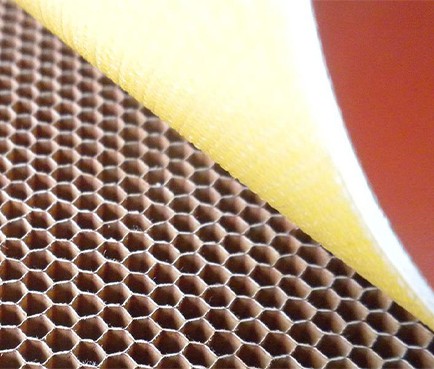
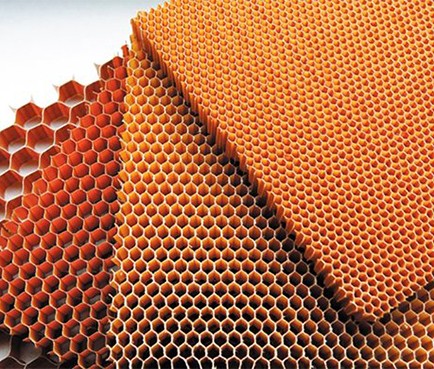
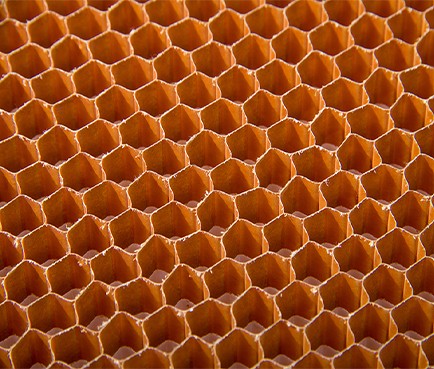
Global companies are increasing their investment in sustainable development. A European group has invested €500 million in a composite circular economy industrial park, integrating the entire supply chain from recycling to remanufacturing. A Japanese research institute has successfully developed a bio-based resin based on seaweed extracts, which boasts mechanical properties comparable to petroleum-based products and is fully biodegradable in the natural environment. A South Korean company has developed the world's lightest composite foam core material, with a density only one-third that of traditional materials. This material is already being used in the battery packs of next-generation electric vehicles.
Market applications are also showing a trend of diversification. An international materials supplier has secured a long-term contract worth $1 billion to supply composite materials specifically for ultra-long blades for global wind power projects. In the construction sector, new carbon fiber-reinforced concrete is being used in the cores of super-high-rise buildings, reducing structural weight by 40%. The medical industry has also seen a breakthrough, with a biocomposite material successfully passing clinical trials and suitable for human bone repair.
Industry experts point to three major trends in the current development of composite materials: the rapid adoption of green manufacturing technologies, the significant improvement in intelligent production, and the continued expansion of application areas. As countries increase their support for strategic industries such as new energy and aerospace, the global composite materials market is expected to maintain an average annual growth rate of over 15% over the next five years. High-performance composite materials will play an irreplaceable role in emerging fields such as hydrogen storage tanks, solid-state batteries, and space exploration.

365天x24小时售后服务电话,随时解答您的疑问

版权所有:苏州博福复合新材料有限公司备案号:苏ICP备2025185518号-1
 中文简体
中文简体
 核心科技技术实力



 苏州市相城区渭塘镇凤南路333号厂房1号楼四楼东边1区