

- 全国咨询热线 18550048524

- 企业邮箱 ming_qiann@163.com
The global composites industry has recently experienced explosive growth, with numerous companies achieving significant breakthroughs in technological innovation and market application. A European materials giant has successfully developed a revolutionary self-healing carbon fiber composite material that can autonomously repair microcracks after damage by heating. It is expected to be initially used in the main load-bearing structures of next-generation civil aircraft. This groundbreaking technology has been certified by the European Aviation Safety Agency and is scheduled for mass production in 2025.
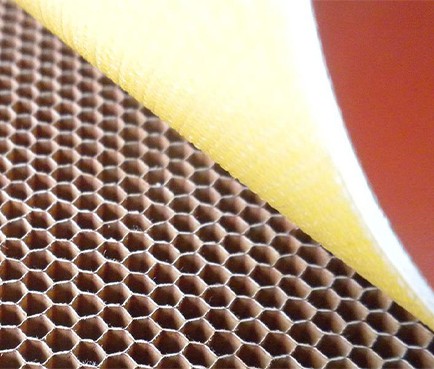
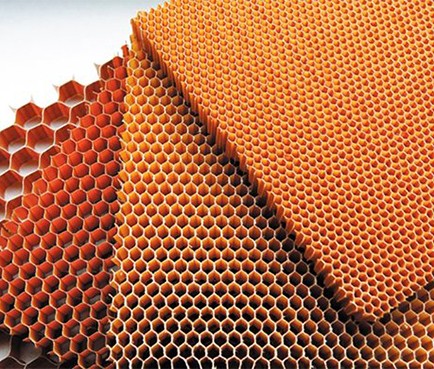
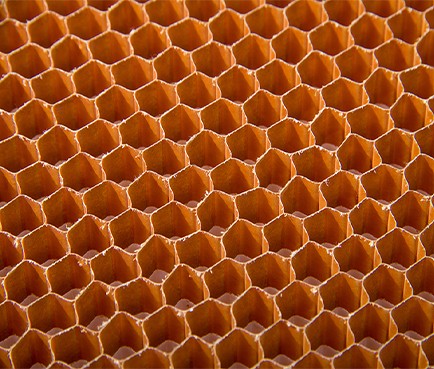
In Asia, a multinational group announced the completion of the world's first intelligent composite material demonstration production line. Using an AI-powered control system, it automates the entire process, from raw material mixing to finished product inspection. This line has increased production efficiency by 50% and reduced energy consumption by 35%. The first batch of products will be used for electric vehicle battery pack casings. Meanwhile, a Chinese research team has developed an ultra-lightweight composite honeycomb structure that weighs only one-third of aluminum alloy but offers twice the impact resistance. This structure has been successfully applied to satellite payload bays.
In North America, significant progress has been made in the field of environmentally friendly materials. An innovative company has launched a 100% biodegradable composite material, reinforced with plant-based resins and natural fibers, that can completely decompose in six months under natural conditions. This product has already received purchase interest from several consumer electronics companies. Another technology company has developed a smart composite material with temperature memory, capable of automatically adjusting its shape based on ambient temperature. This material has broad application prospects in aerospace and medical devices.
A new wave of global investment is underway in capacity development. A Middle Eastern sovereign wealth fund, in partnership with international materials companies, has invested $3 billion in a composite material industrial park, focusing on hydrogen energy storage tanks and wind turbine blade manufacturing. A Japanese materials manufacturer announced the expansion of its carbon fiber production line, which will utilize groundbreaking microwave curing technology, reducing production cycles by 60%.
Market applications are showing a trend toward diversification. In the construction sector, a new type of carbon fiber-reinforced concrete has been applied to the main towers of a cross-sea bridge, setting a new record for the application of composite materials in bridge engineering. The sporting goods industry is also experiencing innovation, with a brand launching the world's first all-composite smart skis with built-in sensors for real-time motion data monitoring. Even more notably, a biocompatible composite material developed by a medical technology company has successfully completed clinical trials and can be used in customized artificial joint replacements.
Industry analysts point out that the current development of composite materials exhibits three key characteristics: rapid iteration of green and environmentally friendly technologies, significant advancements in intelligence, and continuous innovation in application scenarios. Composite materials are playing an increasingly important role, particularly in high-end sectors such as aerospace, new energy, and biomedicine. As global carbon neutrality accelerates, the composite materials market is projected to exceed $150 billion by 2026, with a compound annual growth rate exceeding 18%. In the future, with breakthroughs in cutting-edge fields such as quantum composite materials and 4D printing technology, the industry will usher in even greater development opportunities.

365天x24小时售后服务电话,随时解答您的疑问

版权所有:苏州博福复合新材料有限公司备案号:苏ICP备2025185518号-1
 中文简体
中文简体
 核心科技技术实力



 苏州市相城区渭塘镇凤南路333号厂房1号楼四楼东边1区