

- 全国咨询热线 18550048524

- 企业邮箱 ming_qiann@163.com
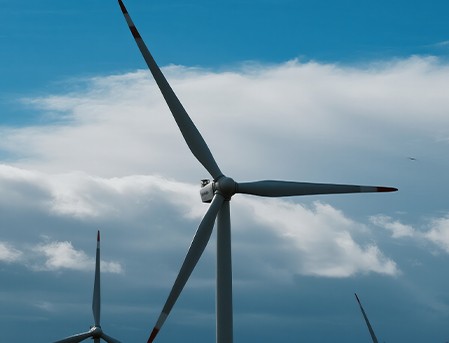
The collaboration between China National Materials Science & Technology Corporation (CNBM) and Goldwind Science & Technology in the field of composite new materials is a prime example of technological innovation in China's wind power industry. Through deep collaboration, the two parties successfully developed a carbon fiber-glass fiber hybrid reinforced wind turbine blade, which not only promoted the upgrading of China's wind power industry chain but also provided innovative solutions for low-speed wind power development globally.
This collaboration stems from the wind power industry's trend toward larger megawatts and longer blades. Traditional glass fiber blades face challenges such as insufficient stiffness and excessive weight as their length increases, while all-carbon fiber blades are prohibitively expensive. To address this industry pain point, CNBM, leveraging its expertise in composite materials, has entered into a strategic partnership with Goldwind Science & Technology, a leading wind turbine manufacturer. CNBM, a subsidiary of China National Building Materials Group specializing in new materials research and development, has extensive technical expertise in fiber-reinforced composite materials. Goldwind Science & Technology, a global provider of integrated wind power solutions, boasts extensive wind farm operation data and turbine design experience.
The collaboration between the two parties primarily focuses on innovative breakthroughs in material systems. The R&D team creatively employed a hybrid reinforcement scheme of carbon fiber and glass fiber, using carbon fiber in key load-bearing areas like the blade's main beam while retaining glass fiber in other areas. This design leverages the high strength and high modulus of carbon fiber while controlling overall cost. Regarding the process, the team overcame the challenges of differing resin wettability between carbon fiber and glass fiber, optimizing vacuum infusion molding parameters to ensure interfacial bonding strength between the two types of fibers. Furthermore, they innovatively employed modular prefabrication technology, pre-molding the carbon fiber components before joining them to the glass fiber main body, significantly improving production efficiency and consistency.
In the structural design phase, the R&D team fully utilized Goldwind's accumulated wind farm operational data and optimized the blade's aerodynamic shape and structural parameters using advanced finite element analysis techniques. They focused on addressing the bending-torsion coupling issue faced by long blades, achieving weight reduction while maintaining excellent aerodynamic performance. To ensure product reliability, the two parties conducted systematic fatigue testing at the Zhangjiakou Wind Power Test Base, simulating the long-term load conditions of the blades under actual wind farm conditions. The test cycles exceeded 10 million, validating the 20-year design life reliability target.
Cost control was a key factor in the project's success. By adopting domestically produced T700-grade carbon fiber, Sinoma Science & Technology not only achieved independent control of key materials but also reduced material costs by approximately 30%. Goldwind Technology provided detailed wind farm operating data to help optimize blade design and reduce unnecessary material redundancy. This close collaboration across the supply chain reduced the overall cost of the final product by 40% compared to an all-carbon fiber solution, significantly enhancing market competitiveness.
This collaborative project has achieved significant technical and economic results. In terms of performance, hybrid blades of the same length are 15%-20% lighter than all-glass fiber blades, significantly reducing tower and bearing loads. Furthermore, due to the increased stiffness, annual power generation can increase by 8%-12% in low wind speeds of 5-6 m/s. Furthermore, this technology has been successfully applied to several of Goldwind Technology's flagship turbine models, including the GW165-4.2MW and GW184-6.45MW, with a cumulative installed capacity exceeding 5 GW. In 2022, this innovative achievement received the First Prize for Scientific and Technological Progress from the China Renewable Energy Society, fully demonstrating the industry's recognition of its technological value. This collaborative project has had a profound impact on China's wind power industry. It successfully demonstrated the feasibility of carbon-glass hybrid materials for wind turbine blades, driving the industry's transition from all-glass fiber to hybrid technology. Driven by its exemplary performance, domestic wind power companies such as Mingyang Smart Energy and Envision Energy have followed suit in developing similar technologies. More importantly, the project achieved domestic substitution of key materials, reducing dependence on international giants like Japan's Toray and Germany's SGL, and enhancing the independent and controllable capabilities of China's wind power industry chain.
Looking ahead, the two parties will continue to deepen their cooperation. In intelligent manufacturing, artificial intelligence algorithms will be introduced to further optimize blade layup design and improve material utilization. In sustainable development, the two parties are jointly developing blade recycling technology, using pyrolysis to recycle carbon fiber. At the forefront of technology, the two parties are working together to develop ultra-long blades up to 120 meters in length to meet the needs of offshore wind turbines exceeding 15 MW.
This successful case fully demonstrates the value of collaborative innovation across the industry chain. The in-depth collaboration between material companies and complete wind turbine manufacturers not only accelerates the industrialization of technological innovations but also achieves a "1+1 greater than 2" effect through complementary advantages. Under the background of the "dual carbon" goals, this innovative model will provide important support for the continuous upgrading of my country's new energy equipment, and also contribute Chinese solutions to the technological progress of the global wind power industry.

365天x24小时售后服务电话,随时解答您的疑问

版权所有:苏州博福复合新材料有限公司备案号:苏ICP备2025185518号-1
 中文简体
中文简体
 创新不止进取不息



 苏州市相城区渭塘镇凤南路333号厂房1号楼四楼东边1区